
Tiles out, green in!
When I first heard the words NK Tegelwippen, I had no idea what they meant. With my limited Dutch, it took me a while to understand that this is the newest Dutch competitive sport: removing paving stones. Every stone removed gets added to your town’s total, and whichever town removes the most is crowned the winner!
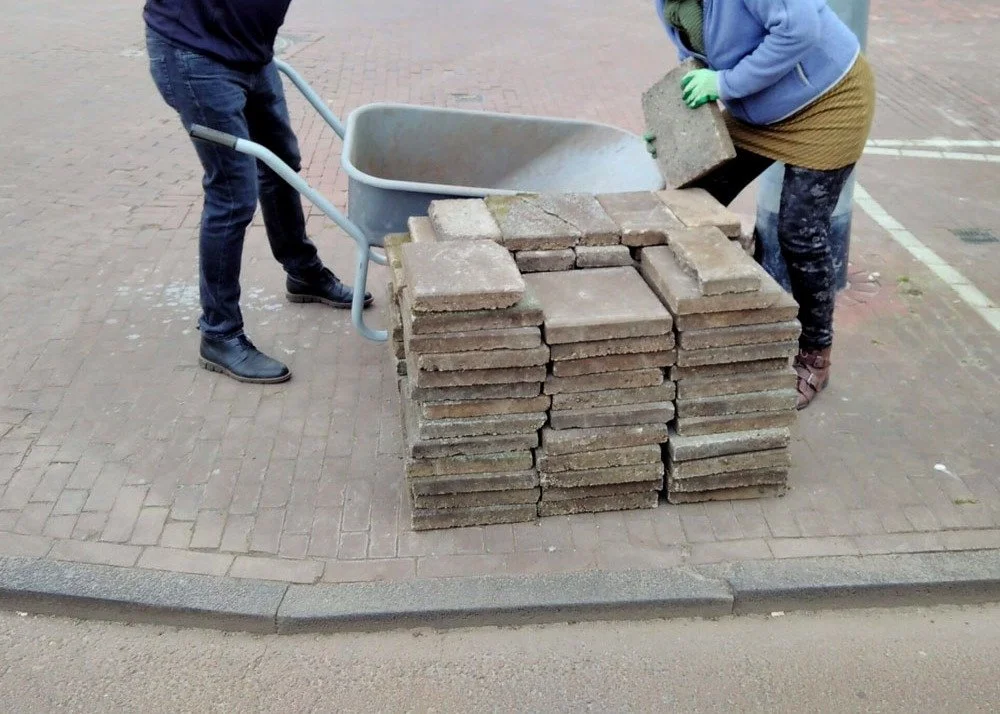
Tiles being ‘whipped‘. Photo from www.nk-tegelwippen.nl
Of course I was an instant convert, whipping wherever I could. But I wondered, why is so much attention given to this in the Netherlands? And as someone who is worried about climate change, I always want to know: how much difference will my actions make? Can small, local actions add up to a measurable impact?
The impact
When we think of Nature Based Solutions, especially those that are studied scientifically, the focus is often on large projects, where ecosystem services are part of the project from the very beginning. These interventions are then studied, and form a large amount of what we know on the effectiveness of Nature Based Solutions in our cities.
The good news is that changes that can be made in your own house and garden can also have a measurable effect, and this has been validated by researchers (see this paper and references therein). So indeed, all these small actions do add up! Given how much of our urban areas are made up of existing houses and gardens, this makes me very hopeful that we can help transform our cities - one tiny tile at a time.
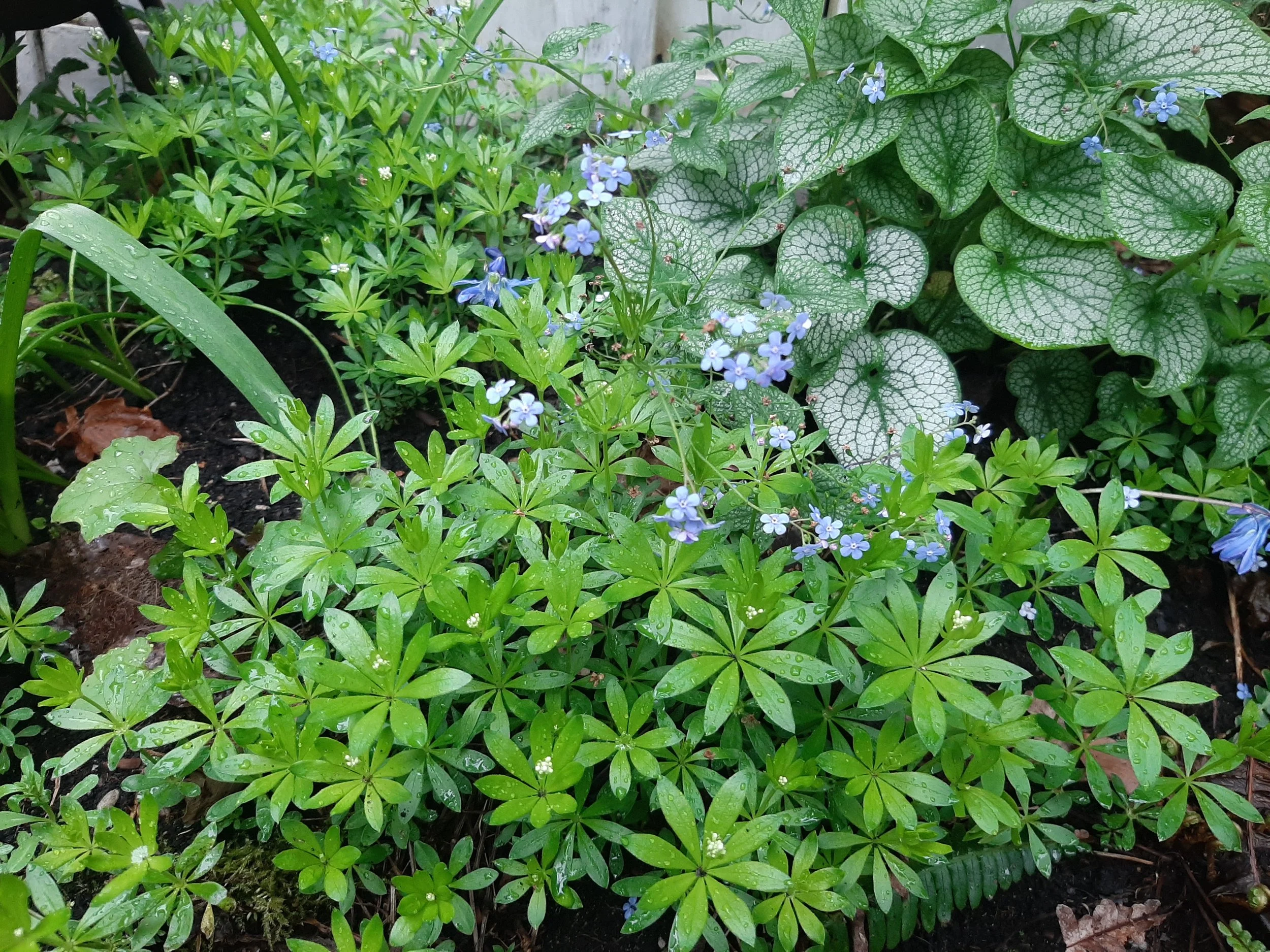
Every tiny area can be made green. Here a space measuring 30cm x 30 cm is greened with Alexander’s Great forget-me-not and Sweet Woodruff.
So how does it work?
Removing paving stones has three measurable effects, which can be seen even in your own garden. The first is that it allows more rain absorption, and this is one of the main reasons why Tegelwippen is so important the Netherlands: better rain absorption stops flooding in our cities (and also your own home!)
The second effect is that removing paving can dramatically cool gardens and streets during the day - by up to 4 degrees when removing paving in sunny areas. As mentioned in a previous post, this also gives a bonus at night, since you no longer have hot tiles radiating heat into your home and keeping you awake.
The third benefit is for our small insect friends: if we create a garden when removing pavers especially using native plants, we create more space (and snacks) for local biodiversity, and who doesn’t want to help bees? Removing tiles and replacing these with a garden requires no special equipment, and is an incredibly cost effective way to cool your home and reduce local flood risk.
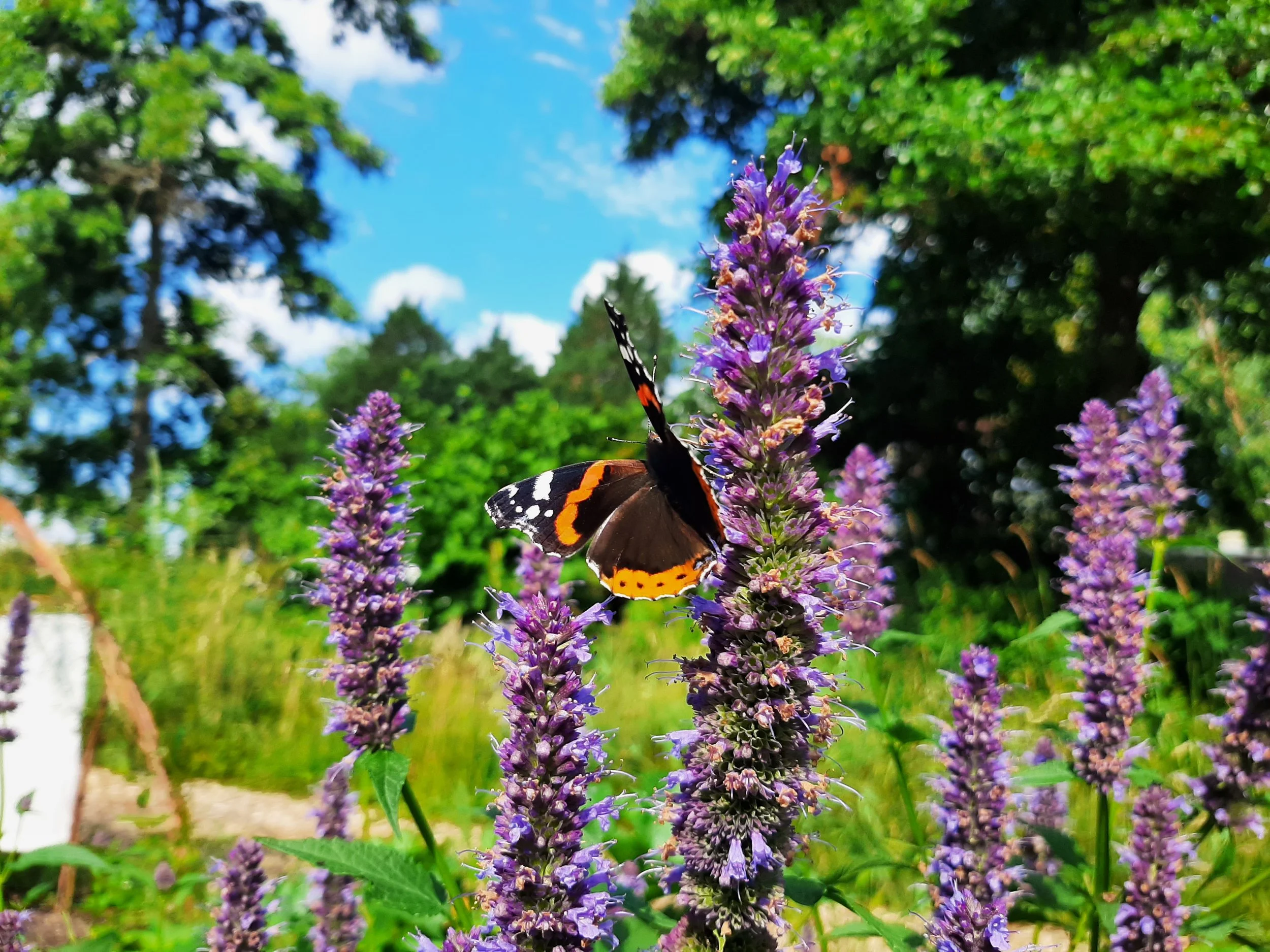
A butterfly enjoying some Agastache flowers.
In a following blog, we’ll go through a step by step creation of a native garden by removing tiles!
Woon je in Nederland? Waarschijnlijk is er een tegeltaxi in je regio - dit kan ook geld besparen!
